
Food security remains one of Africa’s most urgent and complex development challenges. Across the continent, millions of smallholder farmers rely on rain-fed agriculture, face unpredictable weather patterns, and operate with limited access to modern farming tools. Climate change has intensified droughts, floods, pest outbreaks, and declining soil fertility. As populations grow and demand for food increases, the need for innovation is undeniable. While agriculture is deeply rooted in the soil, some of the most transformative solutions may actually come from above the Earth’s atmosphere.
Space technology is no longer the domain of only a few advanced nations. Today, emerging space nations across Africa are developing space programs that directly address developmental needs. Earth observation satellites, global navigation systems, satellite communication, microgravity research, and advanced data analytics are reshaping how we understand and manage food production. The continent is gradually discovering that space technology is not a luxury but a critical tool for resilience, sustainability, and long-term food security.
“In a world older and more complete than ours they move finished and complete, gifted with extensions of the senses we have lost or never attained, living by voices we shall never hear.”
— Olayinka Fagbemiro, Product Designer
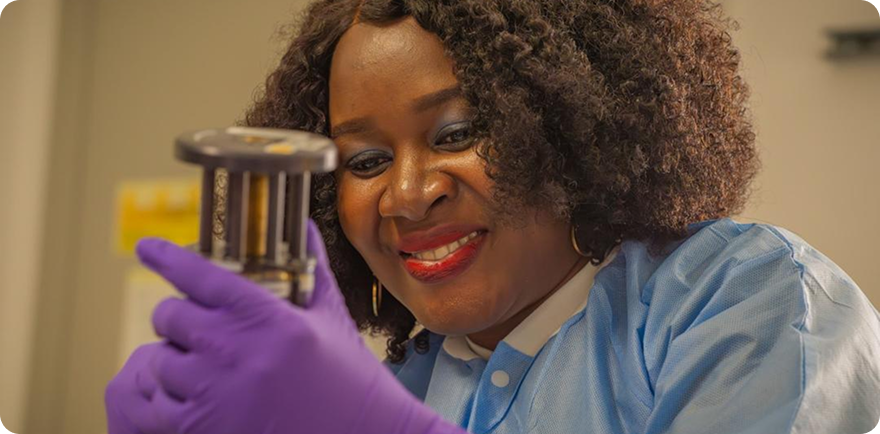
One of the most powerful examples of this new era of innovation is the Jaguar Space and the Nigerian Space Agency (NASRDA) Space for Agriculture initiative, which I had the privilege to lead. This project highlights how African countries can use cutting-edge technology to explore agricultural possibilities far beyond the limits of Earth. In 2025, we sent six Nigerian crop seeds maize, cowpea, sorghum, groundnut, okra, and amaranth to the International Space Station (ISS) for exposure to microgravity conditions. The payload launched on 1 August 2025 aboard the NASA SpaceX Crew 11 mission. After spending time in orbit, the seeds returned to Earth and are now undergoing scientific analysis at the University of Florida.
Why send seeds to space? Microgravity offers a unique environment that cannot be replicated on Earth. When seeds are exposed to space conditions including reduced gravity, radiation, and altered growth stimuli their biological systems respond in unexpected ways. Some seeds develop unique mutations, altered growth behaviors, or improved stress tolerance. Global research has shown that microgravity experiments can lead to crops that are more resistant to heat, drought, and disease. For countries like Nigeria, where smallholder farmers struggle with climate variability and declining yields, these insights have transformative potential.
The Jaguar Space-NASRDA project represents more than a scientific experiment. It is a symbol of possibility. It demonstrates that African nations can contribute meaningful research to global scientific conversations. It shows young people especially girls that scientific discovery is not limited by geography. And it provides a pathway for collaborative learning between local researchers and global institutions. Projects like this challenge long-held assumptions about where innovation can emerge from and who can participate in high impact scientific exploration.
Beyond microgravity research, space technology is already reshaping agricultural practice across Africa in multiple ways. Earth observation satellites provide high resolution images that help governments and farmers monitor crop health, soil moisture, land use changes, and early signs of pest infestation. This data is essential for planning irrigation, predicting harvests, and responding quickly to threats. Satellite based systems also enable climate smart agriculture by providing weather forecasts and climate trend analysis that help farmers make informed decisions.

In remote and rural areas where internet access is limited, satellite communication bridges the digital divide. Farmers can receive extension advisory services, access mobile agricultural platforms, obtain credit information, and participate in digital marketplaces. Emerging agritech entrepreneurs are building solutions that rely on satellite data to deliver simple, actionable insights to farmers through mobile phones. In regions where extension workers cannot reach every farmer, space technology becomes a silent and powerful partner.
Countries like Kenya, South Africa, Ghana, Rwanda, and Nigeria are increasingly incorporating space- based tools into agricultural planning. National space agencies and ministries of agriculture are beginning to collaborate more intentionally, demonstrating a growing understanding that food security is a multidisciplinary challenge that requires scientific, technological, and policy alignment. The African Union has also recognized space as a strategic asset for development through the African Space Policy and African Space Strategy.

Yet, space-based agriculture is not only about advanced satellites or complex missions. At its core, it is about using every available tool to protect the livelihoods of millions of people who depend on farming. It is about helping communities adapt to climate change, improve resilience, and secure a sustainable food future. It is also about inspiring the next generation to engage in science, engineering, technology, and innovation. When students learn that crops from their own country have gone to space, or that satellite images are being used to support local farmers, the world of science becomes real and accessible.
My work in STEM advocacy, especially with girls and young learners, has shown me the power of exposure and representation. When children hear stories of Africans contributing to space science, they begin to believe that they too can become researchers, engineers, innovators, or policy leaders. The Jaguar Space- NASRDA project has become an educational tool that sparks curiosity and encourages schools to integrate space science into their learning activities. Many students are now following the ongoing seed analysis in Florida, asking questions and imagining career possibilities they had never considered before.

To fully harness the power of space technology for food security, African countries must continue investing in capacity building, research infrastructure, and strategic partnerships. Collaboration between governments, universities, space agencies, and international organizations is essential. Local researchers must be trained to interpret satellite data, conduct advanced agricultural experiments, and develop home grown innovations. Policymakers need to shape national strategies that integrate space technology into agricultural planning. Private sector companies and startups also have a critical role in building scalable solutions that reach farmers where they are.
Space technology will not solve all agricultural challenges, but it will significantly expand what is possible. It offers tools for precision, prediction, and protection. It provides insight into landscapes, weather systems, and biological processes in ways that traditional methods cannot. As Africa confronts the realities of climate change and growing food demand, embracing space-based innovation will be essential for creating resilient food systems.
The success of the Jaguar Space-NASRDA mission shows that Africa is not only a beneficiary of global technology but a contributor. It reinforces the message that African talent, leadership, and innovation have a vital place in the future of space science and sustainable development. Most importantly, it demonstrates that when science and purpose come together, even the smallest seed can carry the promise of transformation all the way to space and back.